Dear Neighbors,
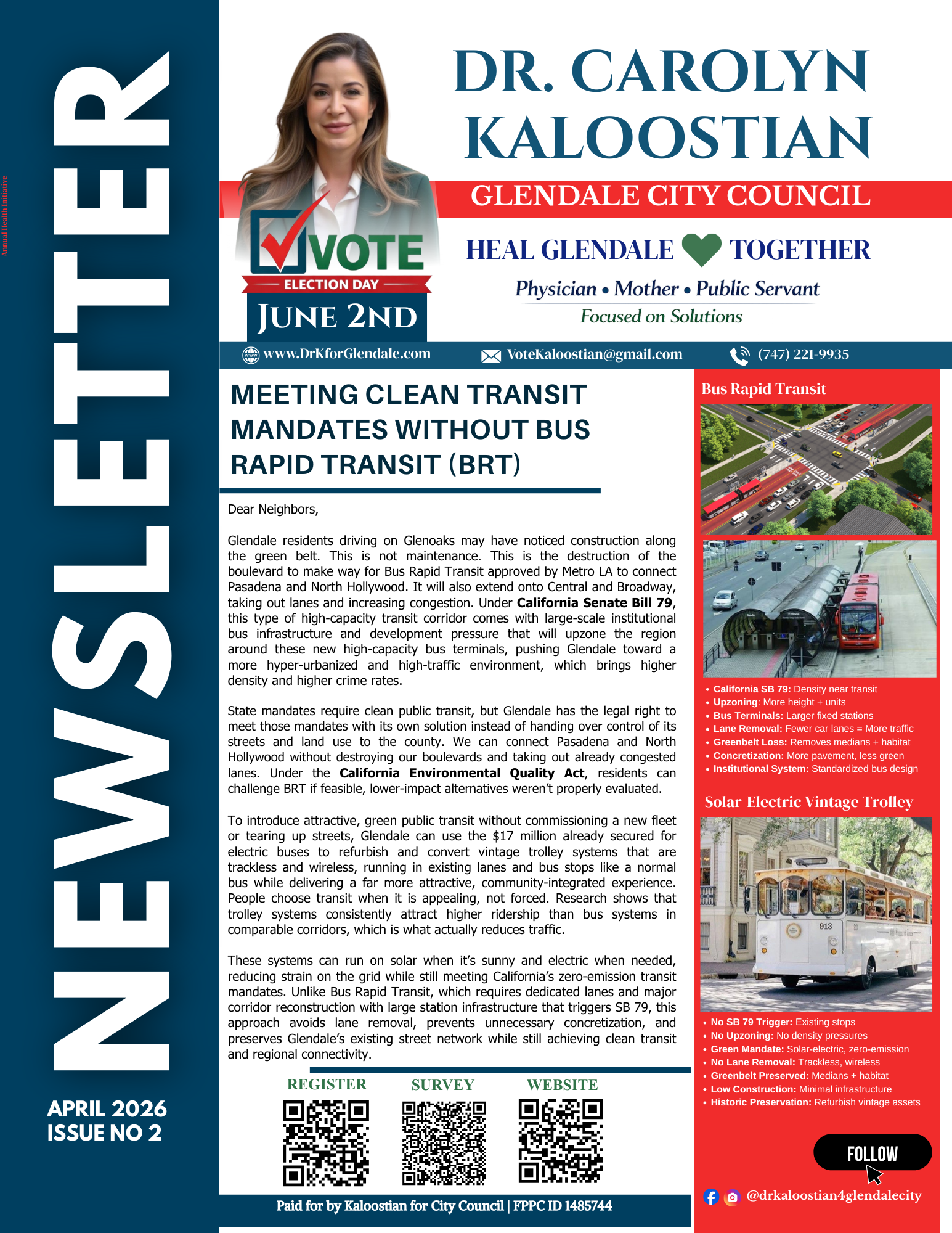
Glendale residents driving on Glenoaks may have noticed construction along the green belt. This is not maintenance. This is the destruction of the boulevard to make way for Bus Rapid Transit approved by Metro LA to connect Pasadena and North Hollywood. It will also extend onto Central and Broadway, taking out lanes and increasing congestion. Under California Senate Bill 79, this type of high-capacity transit corridor comes with large-scale institutional bus infrastructure and development pressure that will upzone the region around these new high-capacity bus terminals, pushing Glendale toward a more hyper-urbanized and high-traffic environment, which brings higher density and higher crime rates.
State mandates require clean public transit, but Glendale has the legal right to meet those mandates with its own solution instead of handing over control of its streets and land use to the county. We can connect Pasadena and North Hollywood without destroying our boulevards and taking out already congested lanes. Under the California Environmental Quality Act, residents can challenge BRT if feasible, lower-impact alternatives weren’t properly evaluated.
To introduce attractive, green public transit without commissioning a new fleet or tearing up streets, Glendale can use the $17 million already secured for electric buses to refurbish and convert vintage trolley systems that are trackless and wireless, running in existing lanes and bus stops like a normal bus while delivering a far more attractive, community-integrated experience. People choose transit when it is appealing, not forced. Research shows that trolley systems consistently attract higher ridership than bus systems in comparable corridors, which is what actually reduces traffic.
These systems can run on solar when it’s sunny and electric when needed, reducing strain on the grid while still meeting California’s zero-emission transit mandates. Unlike Bus Rapid Transit, which requires dedicated lanes and major corridor reconstruction with large station infrastructure that triggers SB 79, this approach avoids lane removal, prevents unnecessary concretization, and preserves Glendale’s existing street network while still achieving clean transit and regional connectivity.